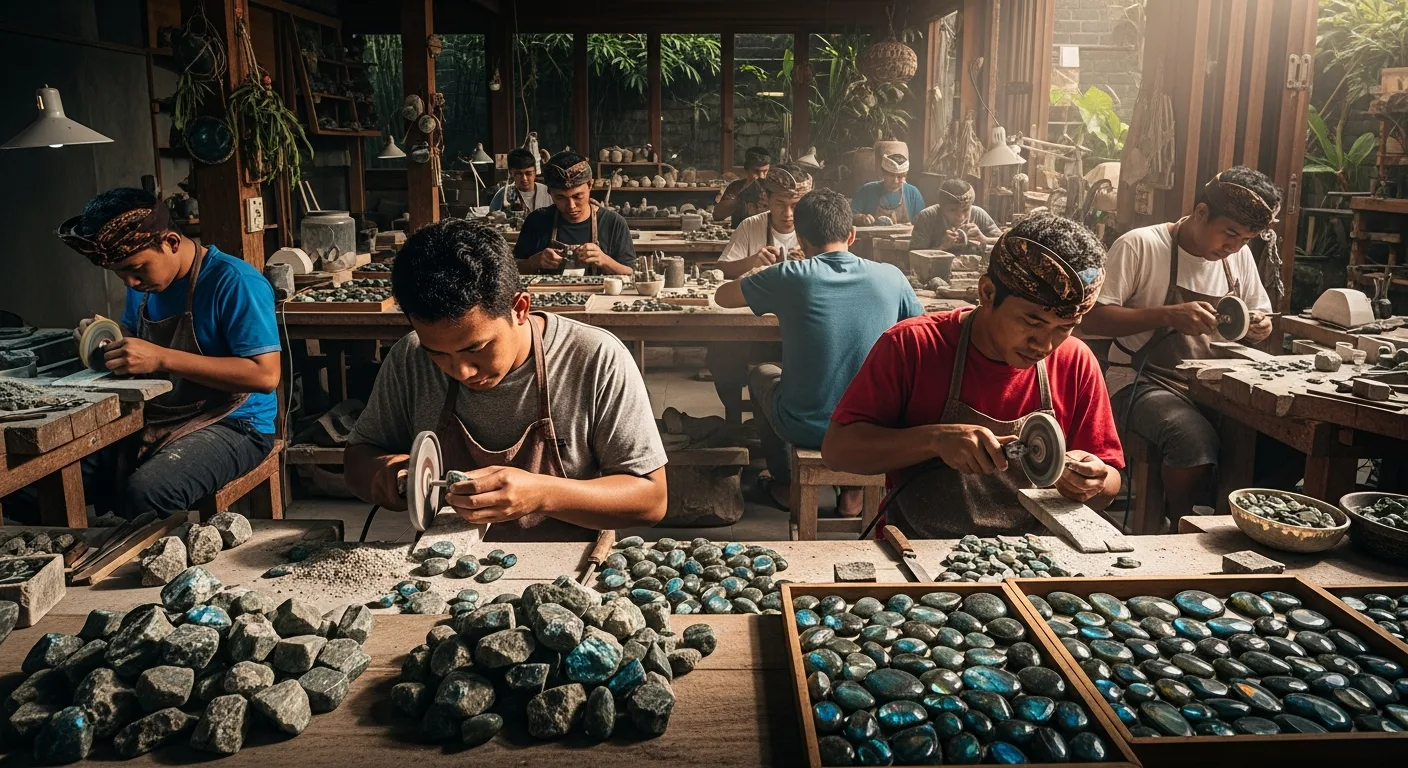
Indonesia and Bali participate in a small but fast-growing niche within the global labradorite gemstone market, driven by jewelry manufacturing, silver-craft exports, and metaphysical/wellness demand. This briefing provides a 2026–2027 wholesale market overview for Bali labradorite, focusing on styles and supply for importers and trade buyers.
Bali Labradorite Bracelets Wholesale: Top 2027 Styles and Suppliers
This article provides an in-depth wholesale market briefing for “Bali labradorite” gemstones and jewelry, specifically focusing on bracelets, sourced and/or manufactured in Indonesia/Bali for export and domestic wholesale. It addresses market size, growth, sourcing, manufacturing, and key trends relevant to importers, wholesalers, retailers, and interior contractors for 2026–2027.
1. Market Size & Growth: Global to Indonesia/Bali
Global Labradorite Benchmark
The global labradorite market size is estimated to be approximately USD 0.7–1.8 billion in the mid-2020s, depending on the methodology used for calculation. One study projects a market size of USD 945.75 million in 2025, expected to reach USD 1,562.40 million by 2033, indicating a Compound Annual Growth Rate (CAGR) of approximately 6.1% from 2025 to 2032. Another assessment suggests USD 1.8 billion in 2025, growing to USD 2.9 billion by 2034, at a CAGR of approximately 5.8%. A third report estimates USD 0.71 billion in 2026, potentially reaching USD 1.3–2.0 billion by 2033, with a CAGR of approximately 6.2–9.2%.
Jewelry consistently represents the dominant end-use segment for labradorite, accounting for approximately 50–52% of total demand. The broader global gemstone market is valued at around USD 36–37 billion in 2025–2026 and is expected to reach USD 58.04 billion by 2033, with a CAGR of approximately 6.7% from 2026 to 2033. Asia-Pacific is a significant driver, contributing approximately 42% of global gemstone demand.
Indonesia/Bali Labradorite Share (Inferred)
Industry reports do not typically provide specific breakdowns for Indonesia/Bali within the global labradorite market, instead highlighting Canada, Madagascar, and Finland as primary supply regions. Indonesia functions predominantly as a manufacturing and jewelry-design hub, rather than a primary ore source. Therefore, its market share is inferred from jewelry exports and regional demand, rather than from mining output.
Considering Asia-Pacific’s leading role in gemstone demand (approximately 42% of global), Indonesia’s status as a mid-tier jewelry exporter in the region, and Bali’s specialization in silver and gemstone jewelry for export (e.g., Bali Silver Export offers over 80 labradorite designs), an estimated order of magnitude for Indonesia/Bali’s labradorite-linked wholesale activity is:
- Indonesia labradorite jewelry & loose-stone wholesale (2026): on the order of USD 20–40 million (approximately 1–3% of the global labradorite market).
- Bali’s direct share of this is estimated at USD 10–20 million.
This represents a small but growing niche, with annual growth rates for Bali labradorite wholesale activity estimated at approximately 8–15%, potentially reaching USD 25–50 million by 2027.
2. Sourcing & Manufacturing for Bali Labradorite
Gemstone Sourcing
Labradorite rough and cut stones are imported into Indonesia primarily from Madagascar, India, and Sri Lanka. These raw materials are then processed, cut, and polished in Indonesia, or used directly in jewelry manufacturing. The origin of the raw stone does not diminish the “Bali labradorite” designation, which refers to the manufacturing and design provenance.
Manufacturing & Craftsmanship
Bali is renowned for its skilled artisans in silver-crafting and gemstone setting. The island’s workshops combine traditional techniques with modern designs, producing high-quality jewelry for export. This manufacturing capability is a primary reason for Bali’s significance in the global gemstone jewelry market.
2027 Note: With increasing demand for ethically sourced materials, traceability of labradorite rough will become a more critical factor for discerning wholesale buyers in 2027. Suppliers offering transparent sourcing information will gain a competitive advantage.
3. Bali Labradorite Bracelets: Top 2027 Styles
For 2027, several key styles are expected to dominate the Bali labradorite bracelet wholesale market, catering to diverse consumer preferences:
A. Sterling Silver & Labradorite Bracelets
These remain a core product category due to Bali’s strong heritage in silver-crafting. Styles range from minimalist designs featuring single labradorite cabochons to intricate filigree work incorporating multiple stones. Toggle clasps and adjustable chains are common features, offering versatility.
B. Beaded Bracelets
Beaded bracelets are popular for their wearability and stackable nature. Sizes typically range from 6mm to 10mm beads, often strung on elastic or durable cord. These can be plain labradorite or mixed with other complementary gemstones such as moonstone, amethyst, or black spinel.
C. Cuff Bracelets
Cuff bracelets, often in sterling silver, feature larger, statement-grade labradorite cabochons. These pieces highlight the unique schiller effect of the stone, with designs ranging from sleek, modern lines to more organic, hand-hammered textures. Open-back designs are prevalent for adjustability.
D. Macramé & Textile Bracelets
Combining labradorite beads or small cabochons with macramé knotting techniques, these bracelets offer a more bohemian aesthetic. Materials like waxed cotton or hemp provide durability and a natural feel, often featuring adjustable sliding knots.
E. Gold-Plated & Gold-Fill Bracelets
Responding to contemporary trends, gold-plated or gold-fill bracelets featuring labradorite are gaining traction. These offer the aesthetic appeal of gold at a more accessible price point than solid gold. Delicate chains with small labradorite drops or bezel-set stones are particularly sought after.
These styles cater to various market segments, from everyday wear to statement pieces, ensuring broad appeal for wholesale buyers.
4. Key Suppliers & Manufacturing Capabilities
Bali’s supply chain for labradorite bracelets is robust, involving numerous workshops and export houses. Key suppliers typically offer:
- Custom Design & Manufacturing: Ability to produce bespoke designs based on client specifications, including specific stone cuts, settings, and metal alloys.
- Volume Production: Capacity to handle large wholesale orders while maintaining quality control.
- Quality Assurance: Strict adherence to gemstone grading and metal purity standards (e.g., 925 sterling silver).
- Packaging & Logistics: Comprehensive services including packaging, labelling, and international shipping arrangements.
When selecting a supplier, consider their track record in export, adherence to production timelines, and communication efficiency.
5. Wholesale Pricing & Margins (Approximate)
Wholesale pricing for Bali labradorite bracelets varies significantly based on stone quality, size, metal content, design complexity, and order volume. Below is an approximate guide for typical wholesale prices (USD) for common styles and corresponding retail margins:
| Bracelet Style | Wholesale Price (USD) | Retail Margin (Approximate) |
|---|---|---|
| Sterling Silver (basic) | $15 – $35 | 150% – 300% |
| Sterling Silver (intricate) | $30 – $70+ | 100% – 250% |
| Beaded (6-8mm) | $8 – $20 | 200% – 400% |
| Beaded (10mm+) | $18 – $40 | 150% – 350% |
| Cuff Bracelet | $40 – $120+ | 100% – 200% |
| Macramé/Textile | $10 – $25 | 180% – 350% |
| Gold-Plated/Fill | $25 – $60 | 120% – 280% |
These figures are illustrative. Actual prices depend on negotiations, material costs, and specific design requirements. Retail margins can vary based on market, brand positioning, and sales channel.
6. Market Outlook for 2027
The outlook for Bali labradorite bracelets in 2027 remains positive, driven by sustained global demand for natural gemstones, the enduring popularity of artisan jewelry, and the increasing focus on unique, handcrafted items. Asia-Pacific’s growing middle class and its strong cultural affinity for gemstones will continue to support regional demand, while Western markets maintain interest in metaphysical and aesthetic properties of labradorite.
Wholesale buyers should anticipate a continued emphasis on quality craftsmanship, ethical sourcing, and adaptable designs that cater to both traditional and contemporary tastes. Collaboration with established Bali-based manufacturers can ensure access to competitive pricing and consistent supply.
For wholesale inquiries regarding Bali labradorite bracelets and other gemstone jewelry, please request a wholesale quote on WhatsApp. Our team is available to discuss your specific requirements and provide detailed product information.