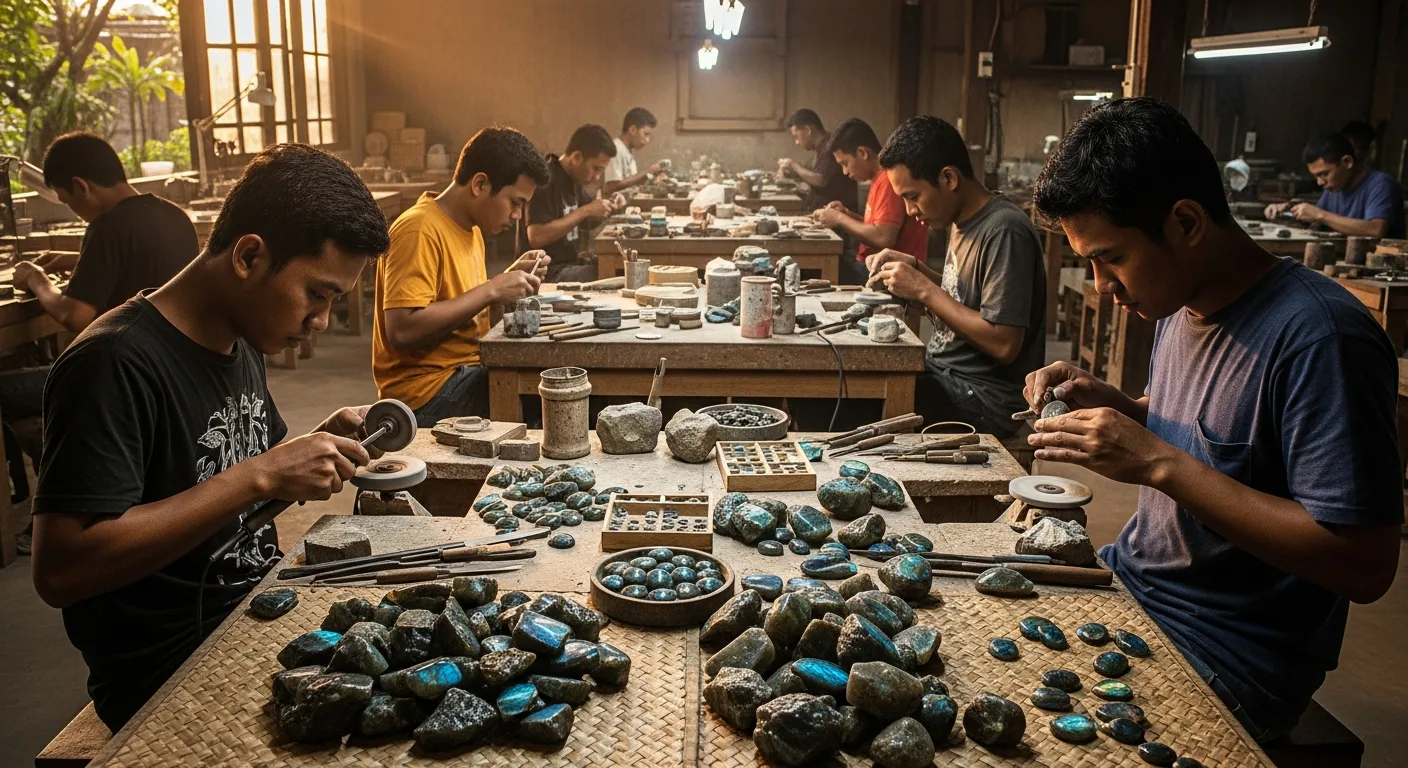
Verifying authentic sterling silver in wholesale Bali labradorite jewellery requires attention to hallmarks, weight, and supplier documentation. Importers and trade buyers should look for the ‘925’ stamp, assess the item’s density, and request material certificates. This diligence helps ensure product integrity and compliance with international trade standards for precious metals.
Buyer Alert: How to Verify Authentic Sterling Silver in Wholesale Bali Labradorite
As a B2B export house specialising in Bali labradorite, we understand the importance of material authenticity for our global clientele of importers, wholesalers, retailers, and interior contractors. The integrity of sterling silver, specifically, is a critical concern when sourcing jewellery from any region, including Bali. This guide provides concrete, factual methods for verifying authentic sterling silver in wholesale Bali labradorite products.
The Importance of Sterling Silver Authenticity
Sterling silver is an alloy containing 92.5% pure silver and 7.5% other metals, typically copper. This composition provides durability and strength while maintaining the aesthetic appeal of silver. Misrepresentation of silver content can lead to significant issues for buyers, including customer dissatisfaction, regulatory non-compliance, and financial losses. The Indonesian/Bali market, while a small but fast-growing niche within the global labradorite gemstone market, is driven mainly by jewellery manufacturing and silver-craft exports. Ensuring material authenticity protects your business and maintains consumer trust.
Understanding Market Context: Bali Labradorite in 2026-2027
Indonesia/Bali participates in a specific segment of the global labradorite market, primarily as a manufacturing and jewellery-design hub rather than a primary ore source. This distinction means that while the global labradorite market is estimated around USD 0.7–1.8 billion mid-2020s, with jewellery accounting for approximately 50–52% of demand, Bali’s contribution is concentrated in value-added products.
Based on Asia-Pacific’s leading role in gemstones (approximately 42% of global demand) and Indonesia’s position as a mid-tier jewellery exporter, a reasonable order-of-magnitude for Indonesia/Bali’s labradorite-linked wholesale activity in 2026 is estimated at USD 20–40 million. This represents approximately 1–3% of the global labradorite jewellery market. This market context underscores the need for robust verification processes, especially for precious metal components.
A 2027 note for buyers: As global gemstone markets are projected to reach USD 58.04 billion by 2033 with a CAGR of approximately 6.7% (2026–2033), demand for authenticated materials in regions like Bali will likely increase. Buyers should therefore establish clear verification protocols now to prepare for anticipated market expansion and increased scrutiny.
Key Verification Methods for Sterling Silver
1. Hallmarking and Stamping
The most straightforward method to verify sterling silver is to inspect for official hallmarks. Authentic sterling silver items should be stamped with ‘925’, ‘STERLING’, or ‘STG’.
- ‘925’ Stamp: This indicates that the item contains 92.5% pure silver. It is the international standard for sterling silver.
- Location of Stamp: Hallmarks are typically found on an inconspicuous part of the jewellery, such as the inside of a ring band, on the clasp of a necklace or bracelet, or on the back of a pendant.
- Clarity: The stamp should be clear and legible. Faint or poorly struck stamps can be a red flag.
While hallmarking is a strong indicator, it is not always foolproof. Some counterfeit items may bear fake stamps. Therefore, it should be used in conjunction with other verification methods.
2. Weight and Density Assessment
Sterling silver has a specific density. While impractical for precise measurement without laboratory equipment, a general assessment of weight can be informative.
- Feel the Weight: Sterling silver is denser than many common base metals used in imitation jewellery. An item that feels unusually light for its size might not be authentic.
- Compare with Known Sterling Silver: If possible, compare the weight and feel of the item in question with a piece of sterling silver of similar size and design that you know to be authentic.
This method is subjective but can help identify obvious discrepancies, especially for experienced buyers.
3. Magnet Test
Pure silver and sterling silver are not magnetic. This simple test can quickly rule out many non-silver metals.
- Use a Strong Magnet: Hold a strong magnet close to the jewellery item.
- Observe Reaction: If the item is attracted to the magnet, it is not sterling silver. Common magnetic metals include iron, nickel, and steel.
It is important to note that while sterling silver is non-magnetic, some base metals are also non-magnetic (e.g., aluminium, lead). Therefore, a non-magnetic result does not definitively confirm sterling silver, but a magnetic result definitively confirms it is not.
4. Chemical Testing (Acid Test)
Acid tests are a more definitive method but require caution as they involve corrosive chemicals. These kits are readily available for trade professionals.
- Procedure: A small, inconspicuous area of the item is lightly scratched to expose the underlying metal. A drop of specific testing acid (e.g., nitric acid for silver) is applied to the scratch.
- Colour Change: The reaction of the metal to the acid indicates its purity. Sterling silver typically reacts in a specific way, often turning a creamy colour. Non-silver metals will produce different reactions, such as turning green or black.
This method is destructive to a very small degree and should only be performed by individuals familiar with the process and safety precautions. Always follow the manufacturer’s instructions for the acid test kit.
5. Supplier Documentation and Transparency
Reputable wholesale suppliers will provide documentation to verify the authenticity of their materials. This is a crucial step for B2B transactions.
- Material Certificates: Request certificates of authenticity or material composition reports for the sterling silver used.
- Assay Reports: For larger orders, consider requesting independent assay reports from a third-party laboratory.
- Supplier Reputation: Work with established suppliers who have a verifiable track record and are transparent about their sourcing and manufacturing processes. Bali Labradorite Wholesale, for example, prioritises clear material specifications.
The table below summarises key verification methods:
| Verification Method | Description | Pros | Cons |
|---|---|---|---|
| Hallmarking (‘925’) | Inspect for clear, legible ‘925’, ‘STERLING’, or ‘STG’ stamp. | Quick, standard industry practice. | Can be faked; some genuine items may lack stamps. |
| Weight/Density | Assess the item’s perceived weight relative to its size. | Subjective, requires experience. | Not quantitative; easily fooled by weighted items. |
| Magnet Test | Use a strong magnet to check for attraction. | Fast, non-destructive, definitive for magnetic metals. | Non-magnetic does not confirm silver; only rules out magnetic metals. |
| Chemical Test (Acid) | Apply specific acid to a scratched area and observe colour change. | Highly reliable for determining metal content. | Destructive (minor scratch), requires caution with chemicals. |
| Supplier Documentation | Request material certificates, assay reports, and verify supplier reputation. | Provides official proof, builds trust. | Relies on supplier integrity and third-party labs. |
Conclusion for Trade Buyers
Verifying authentic sterling silver in wholesale Bali labradorite jewellery is a multi-faceted process that combines visual inspection, physical tests, and critical evaluation of supplier documentation. As a B2B buyer, implementing these robust verification protocols protects your investment, ensures product quality for your customers, and maintains your business’s reputation. Bali Labradorite Wholesale is committed to transparency and quality in all our products. We encourage our trade buyers to perform due diligence and are ready to provide necessary documentation to support your verification processes.
For further information or to discuss your wholesale requirements, please request a wholesale quote on WhatsApp.