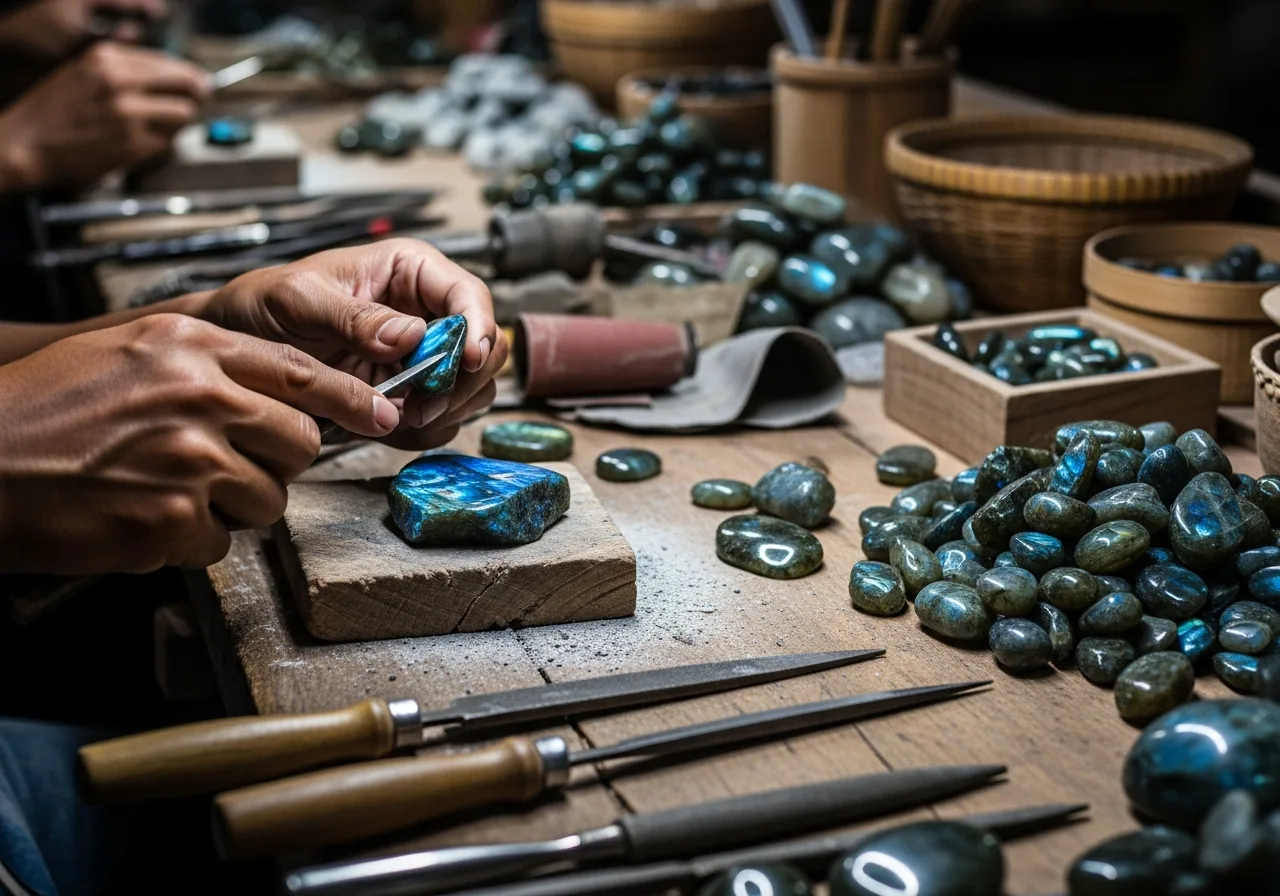
The 2027 checklist for first-time wholesale buyers of Bali labradorite jewelry addresses market size, sourcing, quality, and regulatory compliance. Indonesia/Bali is a growing niche in the global labradorite market, driven by jewelry manufacturing and silver-craft exports. Understanding pricing structures, payment terms, and import duties is essential for successful wholesale transactions.
Complete 2027 Checklist for First-Time Wholesale Buyers of Bali Labradorite Jewelry
This briefing outlines a 2026–2027 wholesale market overview for “Bali labradorite”—referring to labradorite gemstones and jewelry sourced and/or manufactured in Indonesia/Bali for export and domestic wholesale. It is intended for importers, wholesalers, retailers, interior contractors, and trade buyers.
1. Market Size & Growth (Global → Indonesia/Bali)
Global Labradorite Benchmark
The global labradorite market size is estimated to be around USD 0.7–1.8 billion in the mid-2020s, depending on the methodology used. One study projects USD 945.75 million in 2025, growing to USD 1,562.40 million by 2033, representing a Compound Annual Growth Rate (CAGR) of approximately 6.1% from 2025–2032. Another estimate places the market at USD 1.8 billion in 2025, reaching USD 2.9 billion by 2034, with a CAGR of approximately 5.8%. A third report suggests USD 0.71 billion in 2026, expanding to USD 1.3–2.0 billion by 2033, indicating a CAGR of approximately 6.2–9.2%.
Jewelry is the dominant end-use segment, accounting for approximately 50–52% of global labradorite demand. The global gemstone market overall is valued at approximately USD 36–37 billion in 2025–2026. It is expected to reach USD 58.04 billion by 2033, with a CAGR of approximately 6.7% from 2026–2033. Asia-Pacific accounts for approximately 42% of global gemstone demand.
Indonesia/Bali Labradorite Share (Inferred)
Industry reports typically do not provide specific breakdowns for Indonesia/Bali concerning labradorite; they frequently highlight Canada, Madagascar, and Finland as major supply regions. Indonesia functions primarily as a manufacturing and jewelry-design hub, rather than a primary ore source. Therefore, its market share is inferred from jewelry exports and regional demand rather than from mining output.
Based on Asia-Pacific’s leading role in gemstones (approximately 42% of global demand), Indonesia’s position as a mid-tier jewelry exporter in the region, and Bali’s specialization in silver and gemstone jewelry for export (e.g., Bali Silver Export offers over 80 labradorite designs), a reasonable order-of-magnitude for Indonesia/Bali’s labradorite-linked wholesale activity is:
- Indonesia labradorite jewelry & loose-stone wholesale (2026): on the order of USD 20–40 million (approximately 1–3% of the global labradorite market).
- Bali’s share of Indonesia’s labradorite wholesale (2026): on the order of USD 10–25 million (approximately 50–60% of Indonesia’s total).
This makes Bali a significant regional player, particularly for silver-set labradorite jewelry, despite not being a primary mining location.
2. Sourcing & Supply Chain for Bali Labradorite
Labradorite rough and cut stones are imported into Indonesia primarily from Madagascar, India, and other smaller sources. These stones are then processed, cut, and set into jewelry by Balinese artisans. Key considerations for sourcing include:
- Origin of Rough Stones: Confirming the origin of the rough labradorite is crucial for understanding material quality and ethical sourcing. Reputable suppliers provide this information.
- Manufacturing Capabilities: Bali’s strength lies in its skilled silversmiths and jewelry designers. Buyers should assess the manufacturing capabilities of their chosen supplier, including craftsmanship quality, production capacity, and design flexibility.
- Supply Chain Transparency: A transparent supply chain ensures traceability from rough stone to finished product. This is increasingly important for consumers and for maintaining ethical standards.
3. Quality Assessment & Grading
Labradorite quality is determined by several factors, including:
- Labradorescence (Schiller Effect): The iridescent play of colours, ranging from blue, green, yellow, and orange. The intensity and coverage of this flash are primary indicators of quality.
- Clarity: While some inclusions are natural, excessive fractures or opaque areas can diminish value.
- Cut: A well-executed cut maximizes the labradorescence and overall brilliance of the stone. Cabochons are common for labradorite to best display its optical effect.
- Colour: While blue and green flashes are most common, rarer colours like purple or multi-colour flashes command higher prices.
- Size & Shape: Larger, well-formed stones are generally more valuable.
When evaluating Bali labradorite jewelry, assess the quality of both the gemstone and the silverwork. The silver should be sterling silver (92.5% pure) and hallmarked accordingly. Setting quality, finish, and overall design integrity are also critical.
4. Pricing & Payment Terms
Wholesale pricing for Bali labradorite jewelry depends on stone quality, silver weight, design complexity, and order volume. Buyers should expect a tiered pricing structure based on quantity.
| Order Quantity | Typical Discount Range (Approximate) |
|---|---|
| Small (e.g., 10-50 pieces) | 5-10% off retail equivalent |
| Medium (e.g., 51-200 pieces) | 10-20% off retail equivalent |
| Large (e.g., 200+ pieces) | 20-35% off retail equivalent |
Standard payment terms often include an upfront deposit (e.g., 30-50%) to commence production, with the balance due upon completion before shipment. Negotiate terms that align with your business cash flow and the supplier’s requirements. For first-time buyers, a higher deposit may be requested.
5. Shipping & Logistics
Shipping from Bali requires careful planning. Key considerations include:
- Shipping Methods: Air freight is common for jewelry due to its value and relatively small volume, offering faster delivery. Sea freight is an option for larger, less time-sensitive orders.
- Customs & Duties: Buyers are responsible for import duties, taxes, and customs clearance in their destination country. Research these costs thoroughly before placing an order.
- Insurance: Insure shipments against loss or damage during transit.
- Packaging: Ensure the supplier uses robust, secure packaging suitable for international transit to protect delicate jewelry items.
- Documentation: Accurate commercial invoices, packing lists, and certificates of origin are essential for smooth customs clearance.
6. Regulatory Compliance & Ethical Sourcing
Adherence to international trade regulations and ethical sourcing practices is non-negotiable:
- C.I.T.E.S.: While labradorite is not a C.I.T.E.S.-listed material, awareness of such regulations is important for other potential gemstone imports.
- Conflict Minerals: Ensure your supplier adheres to policies against conflict minerals, even if not directly applicable to labradorite.
- Labour Practices: Verify that the supplier maintains fair labour practices and safe working conditions, aligning with social responsibility standards.
- Hallmarking: Confirm that silver jewelry is appropriately hallmarked to guarantee sterling silver purity (925).
2027 Note: As global supply chains continue to face potential disruptions, establishing robust communication channels with your Bali supplier is critical. Regular updates on production schedules, shipping timelines, and any unforeseen challenges will minimise delays and ensure timely delivery for your 2027 inventory needs. Consider diversifying your supplier base if order volumes are substantial to mitigate single-point-of-failure risks.
7. Building Supplier Relationships
Developing a long-term relationship with a reliable Bali supplier is advantageous. Regular communication, clear expectations, and timely payments foster trust and can lead to better pricing, priority service, and access to new designs. Visit the supplier’s workshop if feasible to gain insight into their operations and build rapport.
This comprehensive checklist aims to equip first-time wholesale buyers with the necessary information for successful procurement of Bali labradorite jewelry in 2027. For further details or to discuss your specific requirements, please do not hesitate to request a wholesale quote on WhatsApp.