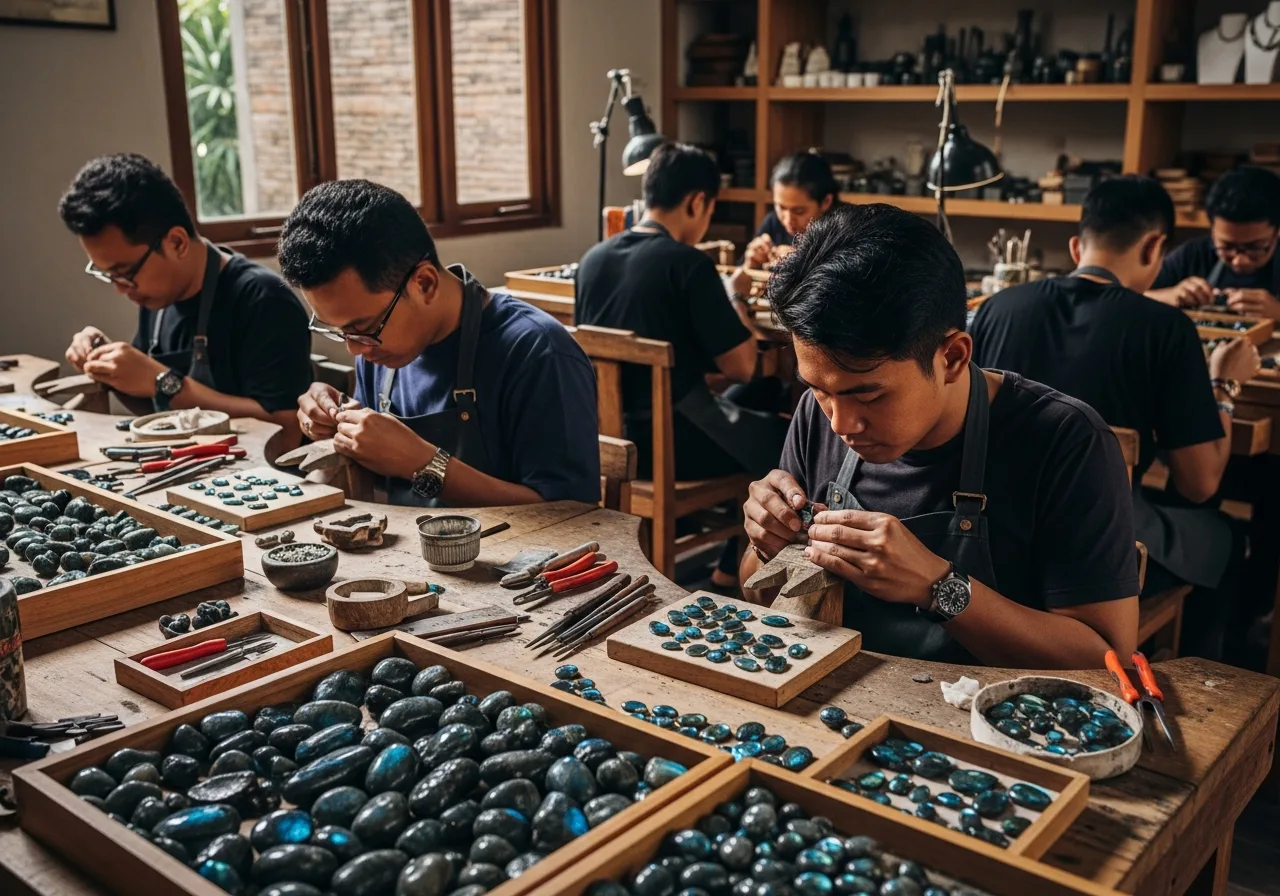
Indonesia and Bali participate in a small but rapidly expanding niche within the global labradorite gemstone market. This growth is predominantly driven by local jewellery manufacturing, silver-craft exports, and a rising demand from the metaphysical and wellness sectors. This briefing details the 2026–2027 wholesale market for ‘Bali labradorite’.
1. Market Size & Growth: Global to Indonesia/Bali
Global Labradorite Benchmark
The global labradorite market size is estimated to be approximately USD 0.7–1.8 billion in the mid-2020s, with variations depending on the analytical methodology used. One study projects a market size of USD 945.75 million in 2025, expanding to USD 1,562.40 million by 2033, indicating a Compound Annual Growth Rate (CAGR) of approximately 6.1% between 2025 and 2032. Another assessment suggests a market value of USD 1.8 billion in 2025, reaching USD 2.9 billion by 2034, with a CAGR of approximately 5.8%. A third analysis estimates the market at USD 0.71 billion in 2026, potentially growing to USD 1.3–2.0 billion by 2033, reflecting a CAGR of approximately 6.2–9.2%.
Jewellery remains the primary end-use segment, accounting for approximately 50–52% of global labradorite demand. The broader global gemstone market is valued at approximately USD 36–37 billion in 2025–2026. This market is expected to reach USD 58.04 billion by 2033, with a CAGR of approximately 6.7% from 2026 to 2033. Asia-Pacific is a significant driver, contributing approximately 42% of global gemstone demand.
Indonesia/Bali Labradorite Share (Inferred)
Industry reports typically do not disaggregate Indonesia or Bali specifically for labradorite; major supply regions highlighted include Canada, Madagascar, and Finland. Indonesia functions primarily as a manufacturing and jewellery-design hub rather than a primary ore source. Therefore, its market share is derived from jewellery exports and regional demand rather than direct mining output.
Based on Asia-Pacific’s substantial role in the gemstone market (approximately 42% of global demand), Indonesia’s standing as a mid-tier jewellery exporter within the region, and Bali’s particular specialisation in silver and gemstone jewellery for export (for instance, Bali Silver Export offers over 80 labradorite designs), a reasonable order-of-magnitude for Indonesia/Bali’s labradorite-linked wholesale activity is:
- Indonesia labradorite jewellery & loose-stone wholesale (2026): on the order of USD 20–40 million (approximately 1–3% of global labradorite wholesale).
- Bali’s share of Indonesia’s labradorite wholesale is estimated at approximately 60–75%, or USD 12–30 million.
This indicates a small but expanding niche for Bali in the global labradorite market.
2. Key Drivers for Bali Labradorite Wholesale
Jewellery Manufacturing and Design
Bali’s long-standing expertise in intricate silver craftsmanship provides a strong foundation for labradorite jewellery. The island’s artisans are adept at working with various cuts and settings, producing pieces ranging from delicate pendants to substantial statement rings and bracelets. This manufacturing capability allows for rapid adaptation to design trends and bespoke orders, which is crucial for B2B buyers looking for unique product lines.
Metaphysical and Wellness Market
Labradorite’s perceived metaphysical properties, such as enhancing intuition and providing protection, continue to drive demand in the wellness sector. This segment includes retailers specialising in spiritual items, healing crystals, and holistic lifestyle products. Bali’s established reputation as a spiritual and wellness destination further amplifies its appeal as a source for these items, linking the product’s origin to its intended use.
Tourism and Export Infrastructure
Bali’s well-developed tourism industry supports a robust export infrastructure, facilitating efficient logistics for wholesale shipments. This includes established freight forwarders and customs processes familiar with gemstone and jewellery exports. The presence of numerous trade shows and B2B sourcing events on the island also provides direct opportunities for international buyers to connect with manufacturers and suppliers.
3. Handcrafted Styles and Trends for 2027
For 2027, several handcrafted styles in Bali labradorite are anticipated to gain traction among importers, wholesalers, and retailers. These styles reflect a blend of traditional Balinese artistry with contemporary design preferences.
Minimalist Settings with Raw or Tumbled Stones
There is a growing preference for minimalist designs that highlight the natural beauty of labradorite. This often involves simple silver bezels or prongs that allow the stone’s iridescence (labradorescence) to be the focal point. Raw or lightly tumbled labradorite pieces, showcasing their organic form, are increasingly popular for pendants and statement rings, appealing to consumers seeking authenticity and connection to nature.
Intricate Silver Filigree and Granulation
Traditional Balinese silverwork, characterised by fine filigree and granulation techniques, continues to be a staple. For 2027, these intricate details are expected to be applied to larger labradorite cabochons, creating a contrast between the smooth, polished stone and the detailed metalwork. This style appeals to buyers seeking pieces with a strong cultural identity and artisanal craftsmanship.
Mixed Media and Multi-Stone Combinations
Designs incorporating labradorite with other natural materials such as wood, leather, or other gemstones (e.g., amethyst, moonstone) are projected to trend. These mixed-media pieces offer versatility and appeal to a broader aesthetic range. Multi-stone designs, where labradorite is paired with complementary coloured gemstones, create visually complex and appealing items for the fashion-conscious consumer.
Carved and Sculptural Labradorite
Beyond traditional cabochons, carved labradorite pieces are gaining interest. This includes small animal totems, intricate floral patterns, or abstract sculptures that can be incorporated into jewellery or sold as decorative objects. The unique optical properties of labradorite allow skilled carvers to create dynamic pieces that shift in colour and light, offering distinctive products for the wholesale market.
2027 Note on Sustainability and Sourcing:
For 2027, B2B buyers are increasingly prioritising transparency in sourcing. Wholesalers and importers should expect a rise in demand for documentation regarding ethical labour practices and environmental considerations in the manufacturing process for Bali labradorite. Suppliers demonstrating clear supply chains will hold a competitive advantage.
4. Comparing Handcrafted Styles: An Overview
The table below provides a comparative overview of the key handcrafted styles in Bali labradorite for the 2027 market, detailing their characteristics, target appeal, and typical applications.
| Style Category | Key Characteristics | Target Appeal | Typical Applications |
|---|---|---|---|
| Minimalist with Raw/Tumbled | Simple silver settings; focus on natural stone shape and iridescence; unpolished or lightly polished surfaces. | Consumers seeking natural aesthetics, understated elegance, and organic forms; metaphysical market. | Pendants, stud earrings, simple rings, small decorative objects. |
| Intricate Filigree & Granulation | Fine silver wirework, small silver beads (granules); traditional Balinese patterns surrounding polished labradorite cabochons. | Buyers seeking artisanal craftsmanship, cultural identity, elaborate detail, and heirloom quality. | Statement rings, large pendants, cuffs, ornate earrings. |
| Mixed Media & Multi-Stone | Labradorite combined with other materials (wood, leather, bone) or other gemstones (e.g., amethyst, garnet, moonstone). | Fashion-forward consumers, bohemian styles, those seeking unique material combinations and varied textures. | Necklaces, bracelets, earrings, men’s jewellery. |
| Carved & Sculptural | Three-dimensional carvings (e.g., animals, abstract forms, faces) from labradorite; often highly polished to enhance labradorescence. | Collectors, art enthusiasts, those seeking unique decorative items, and statement jewellery pieces. | Pendants, small figurines, decorative desk objects, focal points in larger designs. |
| Contemporary Geometric | Clean lines, geometric shapes (squares, triangles, rectangles) in silver settings; polished, faceted, or smooth cabochon labradorite. | Modern design preferences, minimalist fashion, architectural aesthetics. | Sleek rings, bar pendants, geometric earrings, cufflinks. |
5. Sourcing Considerations for B2B Buyers
When sourcing Bali labradorite for 2027, B2B buyers should consider several factors to ensure product quality, supply chain reliability, and market competitiveness.
Quality Control
Consistency in labradorite quality, particularly concerning the intensity and colour play of labradorescence, is paramount. Buyers should establish clear quality benchmarks with suppliers, including specifications for clarity, cut, and finish. Regular sample reviews and batch inspections are essential to maintain standards across orders.
Production Capacity and Lead Times
Assessing a supplier’s production capacity is crucial for fulfilling large or recurring orders. Understanding realistic lead times for custom designs and bulk quantities will aid in inventory planning and market responsiveness. Establishing long-term relationships with reliable manufacturers can mitigate supply chain disruptions.
Customisation and Design Flexibility
Many B2B buyers require customisation options to differentiate their product lines. Suppliers in Bali often offer design flexibility, allowing buyers to specify stone shapes, setting styles, and metal finishes. Clear communication regarding design specifications and minimum order quantities for custom work is vital.
Pricing and Payment Terms
Wholesale pricing for Bali labradorite is influenced by stone quality, craftsmanship complexity, and order volume. Negotiating favourable payment terms, including deposit requirements and final payment schedules, is an important aspect of B2B transactions. Understanding the cost structure, including shipping and insurance, is also necessary for accurate landed cost calculations.
6. Future Outlook for Bali Labradorite
The outlook for Bali labradorite in the global wholesale market remains positive, driven by sustained demand in jewellery and the wellness sector. The island’s unique blend of artisanal skill and established export infrastructure positions it to capture an increasing share of this niche market.
Continued innovation in design, coupled with a focus on ethical sourcing and transparent supply chains, will be critical for Bali’s manufacturers and exporters to thrive. As global gemstone demand continues to grow, Bali labradorite is well-placed to offer distinctive, handcrafted products that appeal to a discerning international clientele.
For wholesale inquiries or to discuss custom orders, please request a wholesale quote on WhatsApp.